
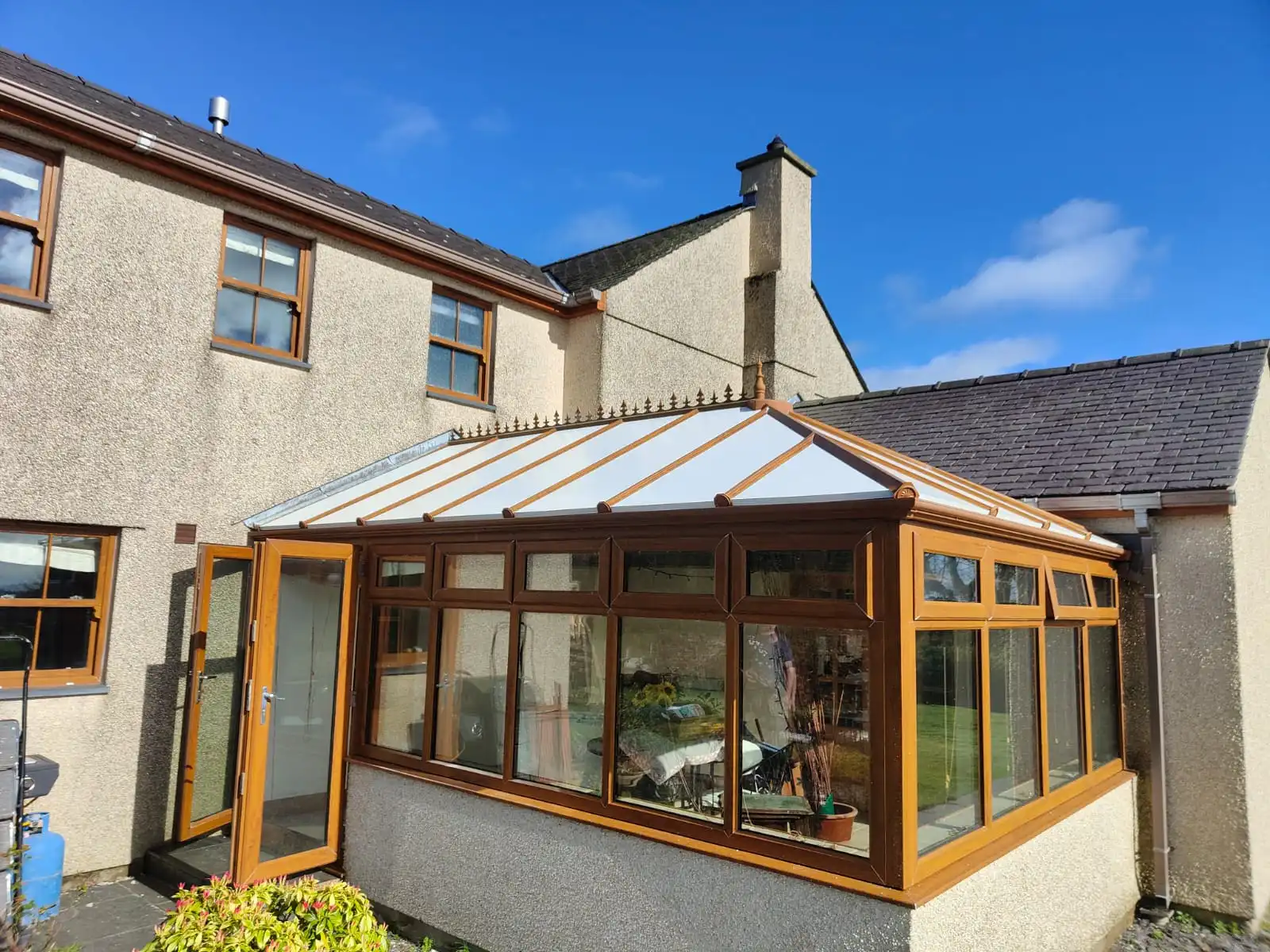
Quick answer: Choose conservatory roof blinds if glare and light control are your main concern – they’re affordable, quick to fit, and improve comfort straight away. Choose insulated roof panels, such as CosyPanels®, if you want year-round temperature control and reduced condensation, because they tackle the root cause of heat loss rather than just the symptoms. Many homeowners get the best results by combining both.
If your conservatory turns into a greenhouse every summer and an icebox every winter, you’re not alone. Harsh glare on sunny days, condensation streaking down the glass, and a room you only use for half the year are among the most common complaints we hear from UK homeowners. The good news is that you don’t have to live with it.
Two solutions tend to come up again and again: conservatory roof blinds and insulated roof panels. Both can genuinely improve your comfort, but they solve different problems in different ways, and at different price points. This guide walks you through how each option performs on glare, temperature, condensation, installation and cost, so you can choose the conservatory roof solution that fits your home.
Why your conservatory feels uncomfortable
Before comparing solutions, it helps to understand what’s actually causing the discomfort. Most conservatory problems come down to three things.
Glare and harsh sunlight
Your conservatory is built almost entirely from glass, which means there’s nowhere for bright sunlight to hide. On sunny days, glare can make screens unreadable and rooms uncomfortably bright, even when the temperature itself isn’t the issue.
Overheating in summer and heat loss in winter
A conservatory roof is one of the largest unshaded glazed surfaces in your home. In summer, it lets in strong solar gain, pushing temperatures up quickly. In winter, the same glazing lets heat escape, leaving the room cold and draughty.
Condensation and damp
Condensation forms when moisture-laden warm air meets a cold surface, such as a single-glazed or poorly insulated roof. According to Oxford City Council and GOV.UK guidance, this is a normal process in UK homes, but it becomes a problem when it’s persistent, leading to damp, mould and musty smells if airflow isn’t managed properly.
Each of these issues has a different root cause. That’s exactly why the right fix depends on what’s actually bothering you.
| Factor | Conservatory roof blinds | Insulated roof panels (CosyPanels®) |
|---|---|---|
| Cost | A few hundred pounds up to around £1,000+ | From £3,146 including VAT |
| Installation time | Hours to a single day | From one day |
| Disruption | Minimal | Low – panels fit your existing frame in many cases |
| Glare control | Strong | Strong at roof level |
| Natural light | Reduced when closed | Reduced at roof level, retained at side windows |
| Heat loss reduction | Moderate | Strong |
| Solar gain reduction | Strong | Strong |
| Condensation impact | Limited, and can trap moisture if ventilation isn’t managed | Reduces condensation when ventilation is maintained |
| Upkeep | Regular cleaning | Minimal |
| Best fit | Light and glare control on a budget | Year-round comfort and long-term value |
What are conservatory roof blinds?
Conservatory roof blinds fit inside the roof structure, directly beneath the glazing or polycarbonate panels. Homeowners choose them for their appearance as much as their function – they soften harsh light and give the room a more finished, comfortable feel.
Types of conservatory roof blinds (pleated, roller, sail and honeycomb)
- Pleated blinds: A classic, affordable option that folds neatly into the roof pitch.
- Roller blinds: Simple to operate and available in a wide range of fabrics.
- Sail blinds: A softer, more decorative style that drapes across the roof for a relaxed look.
- Honeycomb (cellular) blinds: Built with a cell structure that traps air, giving a small additional insulating benefit alongside glare control.
How thermal and honeycomb blinds work
Honeycomb blinds trap air within their cell structure and in the gap between the blind and the glass. This double layer of insulation reduces cold draughts and cuts unwanted solar gain, and the performance difference is measurable. Research by the British Blind and Shutter Association (BBSA), conducted under controlled laboratory conditions at the Energy House facility, found that a blockout honeycomb blind in a framed bead fit system reduced heat loss through windows by 32 per cent. That’s a meaningful thermal improvement from a product that needs no structural work to your conservatory.
What are insulated conservatory roof panels?
Insulated roof panels, such as CosyPanels®, take a different approach. Rather than adding a layer inside the roof, they replace your existing glass or polycarbonate roof sheets with a solid, insulated panel.
How CosyPanels® work
CosyPanels®:
- Replace your existing roof glazing while keeping your original conservatory frame in place
- Add a solid insulated core – high-density XPS between rigid PVC outer layers – designed to keep warmth in during winter and heat out during summer
- Fit your conservatory’s existing structure in many cases, so there’s no need to rebuild the room (suitability is confirmed at survey)
- Are fitted from one day, with prices from £3,146 including VAT
Insulated panels vs internal insulation vs a full roof replacement
Not all insulated roof upgrades are the same. Based on Checkatrade (2026) cost data for a standard 9m² conservatory:
- Internal insulation typically costs £2,000–£4,500 and takes around 1–2 days to install.
- A full insulated timber roof replacement typically costs £5,000–£8,000 and takes around 3–5 days to install.
CosyPanels® sit alongside these options as a panel-replacement solution, from £3,146 including VAT and fitted from one day. See our conservatory roof insulation cost guide for more detail.
Glare and natural light: how each option compares
Light control is the single biggest reason most homeowners start looking at conservatory roof solutions in the first place, so it’s worth giving it proper attention.
How roof blinds control glare
Blinds give you direct, adjustable control over glare. Close them fully on bright days to block harsh sun, or leave them open to let light flood in. This flexibility is one of their biggest strengths.
How insulated panels affect light in your conservatory
Because insulated panels replace the roof glazing with a solid surface, they reduce the amount of natural light entering from above. Your side windows continue to let light in as normal, so the room won’t be dark, but it will feel different from a fully glazed roof.
Temperature control in summer and winter
What conservatory roof blinds handle well
Blinds make a genuine difference to your day-to-day comfort. They cut glare instantly, reduce solar gain on hot days, and – particularly with honeycomb and fitted thermal designs – can meaningfully reduce heat loss through the glazing, which in turn helps keep your energy bills down. They work on the glass itself, though, not on the roof structure, so they’re best understood as a complementary fix rather than a structural one.
Where blinds reach their limit
Standard conservatory roof blinds are primarily designed for glare and light control, not insulation. Even thermal or honeycomb blinds, while genuinely effective at reducing heat loss through the glazing, work on the glass itself rather than the roof structure. If your conservatory still feels cold near the roofline even with blinds closed, that’s usually a sign the roof insulation, not the shading, is the real issue. Think of blinds as treating the symptom; roof insulation treats the cause.
Condensation, damp and ventilation
Why condensation forms in conservatories
Condensation happens when warm, moisture-laden air comes into contact with a cold surface. In a conservatory, that cold surface is usually the roof glazing, which is why droplets so often appear there first. See our guide to condensation in conservatories and how to fix it.
How blinds and insulation each affect condensation
Blinds don’t address the underlying cause of condensation, and if fitted too close to cold glass, they can trap moisture behind them and make the problem worse. Insulated panels raise the surface temperature of the roof, which reduces the conditions that cause condensation in the first place – but only if you maintain ventilation alongside the upgrade.
Simple steps to keep airflow healthy
- Keep trickle vents open and unblocked, as recommended by GOV.UK guidance
- Ask your installer how your ventilation will be managed once insulation is fitted
- Avoid fitting blinds flush against cold glass without an air gap
Installation, disruption and upkeep
Fitting conservatory roof blinds
Blinds are one of the quickest upgrades available. Most are fitted within hours and rarely take more than a single day, with minimal mess or disruption to your home.
Insulating your conservatory roof: what to expect on install day
CosyPanels® are fitted from one day: the old roof panels are removed and the new insulated panels slot into the same frame, followed by a water test and handover. By comparison, Checkatrade (2026) data suggests internal insulation typically takes 1–2 days, while a full insulated roof replacement takes 3–5 days.
Ongoing maintenance
Blinds need regular cleaning to keep the fabric and mechanisms in good condition, and the moving parts mean there’s some ongoing upkeep to factor in. Insulated panels, once fitted, need very little attention – there are no moving parts and no fabric to maintain.
Costs and long-term value
How much do conservatory roof blinds cost?
Blinds typically range from a few hundred pounds up to around £1,000 or more, depending on size, style and the number of panels you need to cover.
How much does insulating your conservatory roof cost?
CosyPanels® start from £3,146 including VAT, covering complete installation, testing and handover with all warranties issued: a 2-year insurance-backed guarantee and a 10-year product warranty. For comparison, Checkatrade (2026) puts internal insulation for a standard 9m² conservatory at £2,000–£4,500, and a full insulated timber roof replacement at £5,000–£8,000. Either way, energy-efficient improvements are increasingly attractive to buyers.
Building regulations and planning permission
If you’re replacing a see-through glazed or polycarbonate roof with a solid tiled roof, building regulations approval is likely to be required. For insulated roof panels, whether approval is needed depends on your conservatory, and we confirm this at your survey. In England, the relevant guidance is GOV.UK Approved Document L, Volume 1: Dwellings, but rules differ across Scotland, Wales and Northern Ireland.
Which conservatory roof solution is right for you?
Choose roof blinds if…
- Glare and harsh light are your main concern
- You want a quick, low-cost, low-disruption upgrade
- You’re happy to manage temperature with blinds day to day
Choose insulated roof panels if…
- You want to use your conservatory comfortably all year round
- Condensation and cold spots near the roofline are a recurring problem
- You want a long-term fix without rebuilding the roof
Choose a full roof replacement if…
- Your existing roof frame is in poor condition or needs replacing anyway
- You want the strongest possible improvement to warmth and comfort
- You’re prepared for a longer installation period and higher cost
When combining blinds and insulation works best
For many homeowners, the best outcome comes from doing both. Insulated panels handle the heavy lifting on temperature and condensation, while blinds on the side windows give you flexible, day-to-day control over glare and light.
What are the best conservatory roof blinds for insulation?
If you’re sticking with blinds rather than upgrading your roof, the type you choose makes a real difference. Research by the British Blind and Shutter Association (BBSA), conducted under controlled conditions at the Energy House facility, found that blinds can reduce heat loss through windows by up to 33 per cent, with the highest-performing designs fitted with side channels or a framed bead fit system. Honeycomb (cellular) blinds are generally the strongest all-round choice, combining effective glare control with an air-trapping cell structure that reduces both heat loss and solar gain. Pleated and roller blinds with fitted side channels also perform well, and all blind types offer solid glare control, so your choice will depend on how much weight you place on thermal performance versus flexibility and budget.
Get expert advice before you choose
Choosing between conservatory roof blinds and insulated panels doesn’t need to be overwhelming. The right answer depends on your budget, how you use your conservatory, and which problem bothers you most – glare, temperature, or condensation.
If you’d like tailored advice for your conservatory, request a free quote. We’ll help you weigh up your options and recommend the solution that fits your home and your budget.
Frequently asked questions
Do conservatory roof blinds stop glare?
Yes. Conservatory roof blinds are one of the most effective and affordable ways to control glare, letting you block harsh sunlight on bright days while keeping the option to let light in when you want it.
Do thermal blinds make a difference in a conservatory?
Yes. Thermal and honeycomb blinds can make a genuine difference. Standard conservatory roof blinds are primarily designed for glare and light control, but thermal designs, particularly honeycomb (cellular) blinds, also reduce heat loss through the glazing. Research by the British Blind and Shutter Association (BBSA) found that a blockout honeycomb blind in a framed bead fit system reduced heat loss through windows by 32 per cent under controlled conditions. That said, blinds work on the glass, not the roof structure, so they work best alongside, not instead of, proper roof insulation if year-round comfort is your goal.
Is it cheaper to fit blinds or insulate the roof?
Blinds are the cheaper option upfront, typically costing a few hundred pounds up to around £1,000+. CosyPanels® insulated roof panels start from £3,146 including VAT, but they address the underlying cause of heat loss rather than just the symptoms.
Will insulating my conservatory roof stop condensation?
Insulated panels reduce the conditions that cause condensation by raising the surface temperature of the roof. However, this only works effectively if you maintain ventilation alongside the insulation, so good airflow planning matters.
Can I fit conservatory roof blinds myself?
Many standard conservatory roof blinds are designed for straightforward fitting, but made-to-measure roof blinds are often best installed professionally to ensure a precise, secure fit. Speak to your supplier about which option suits your roof.
Do I need planning permission to insulate my conservatory roof?
Most conservatory insulation projects don’t require planning permission. Whether building regulations apply depends on your conservatory and the type of roof, so confirm requirements with your installer before work begins.
Will insulated roof panels make my conservatory darker?
Insulated panels reduce light from directly above, since they replace the roof glazing with a solid surface. Light from your side windows is unaffected, so the room won’t be dark, but it will feel different from a fully glazed roof.