
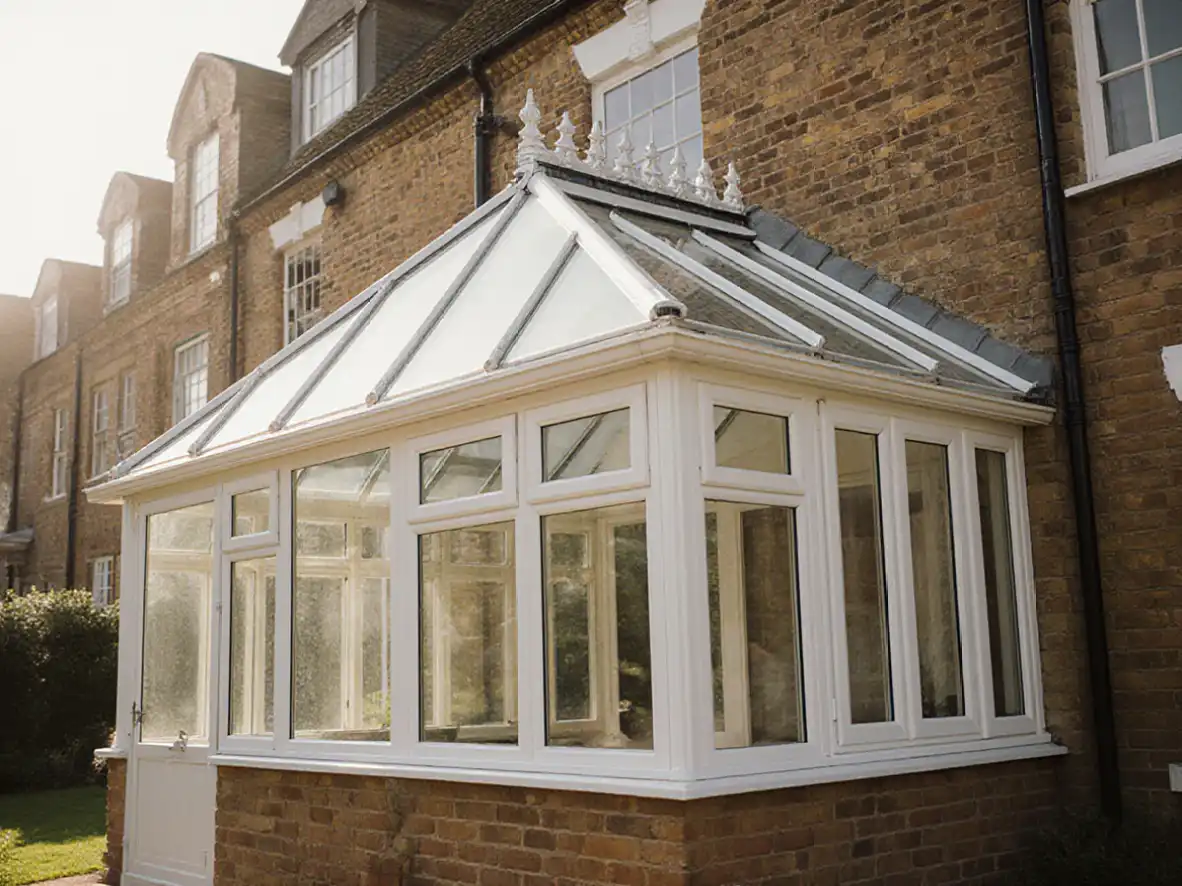
Quick answer: Internal conservatory insulation fits a ceiling assembly beneath your existing roof, keeping costs low and installation quick, usually without planning permission. Full roof replacement swaps the entire structure for a solid, highly insulated roof, offering better long-term performance but requiring building regulations approval and a higher budget. Your choice depends on your conservatory’s structure, your budget, and how you want to use the space.
Cold in winter, stifling in summer — an uninsulated conservatory rarely gets used the way homeowners hoped it would. If yours has become a glorified storage room rather than the extra living space you pictured, you’re not alone, and you have options.
Two solutions consistently come up: internal insulation and full roof replacement. Both tackle the same problem — heat escaping through the roof — but they go about it in very different ways, at very different price points, with very different levels of disruption to your home.
This guide breaks down exactly what each option involves, how they compare on cost, structure, light and condensation risk, and which one is likely to suit your existing conservatory. By the end, you’ll have a clear framework for making the right call rather than guessing.
What Does Internal Conservatory Insulation Actually Involve?
Internal insulation works with what you already have. Rather than removing your existing roof, an installer fits a ceiling system underneath it — typically a timber subframe, a layer of high-performance insulation, and a finished ceiling surface in either uPVC or plasterboard. The SnugCore™ Ceiling System is one example of this approach: your original glass or polycarbonate roof stays exactly where it is, continuing to do its job as the weather barrier, while the new internal layer does the work of keeping heat in and noise out.
Because nothing changes on the outside of your home, this route is generally quick. Most conservatories are finished in a single day, and you won’t need scaffolding or structural reinforcement.
What Does Full Roof Replacement Involve?
Full roof replacement is a different scale of project. Instead of adding a layer beneath your existing roof, the entire structure is removed and replaced with a new one — often a solid, tiled roof or a lightweight insulated alternative with a far lower U-value than standard glass or polycarbonate.
This is a bigger structural undertaking, and it’s treated that way by building control. The GGF Good Practice Guide draws a clear line between simply upgrading an existing roof and fully replacing the structure, precisely because changing the roof load changes what your conservatory’s frame and foundations need to support.
What Are the Pros and Cons of Each Option?
Weighing these two approaches comes down to balancing upfront cost against long-term performance.
Internal insulation:
- Costs significantly less upfront, with systems starting from around £1,495
- Installed in a day for most conservatories
- Doesn’t touch the external structure
- Retains slightly less heat than a full solid roof replacement, since the original roof remains in place
Full roof replacement:
- Delivers stronger thermal performance — U-values can drop from around 1.6 for standard polycarbonate down to roughly 0.15 for a solid roof
- Makes your conservatory feel like a genuine extension, not just a glazed add-on
- Involves a much bigger project, typically starting from around £5,000
- Requires structural checks and formal approval before work begins
Choose internal insulation if your existing roof is sound and you want a fast, budget-friendly fix. Choose full replacement if you want the best possible thermal performance and you’re prepared for a larger project.
Will Either Option Affect Your Conservatory’s Structure?
This is where the two approaches diverge most sharply.
Internal insulation is fixed to the underside of your existing roof bars using a lightweight timber subframe. It adds negligible weight and works with the conservatory’s current structural capacity, which is why it doesn’t typically require planning consent or a building regulations application.
Full roof replacement is a different story. Swapping a translucent roof for an insulated, non-translucent one counts as a notifiable change, and according to LABC Front Door, you’ll need to submit a building regulations application. Building control will inspect your existing conservatory to confirm it can bear the extra load. Signs of distress in the frame can point to foundations that aren’t up to the job, and window or door supports may need steel inserts to carry the weight down to the floor slab. If either issue crops up, expect additional remedial costs.
It’s also worth knowing that many conservatories qualify for Building Regulations exemptions under Schedule 2, Class 7 of the Building Regulations. Government guidance confirms that further structural work — including a roof replacement — can affect that exempt status, so it pays to check before committing to a full rebuild.
How Does Each Option Affect Natural Light?
Conservatories exist for the light, so this matters more than it might first appear.
Internal insulation with a plastered or uPVC ceiling finish will reduce overhead light, since you’re covering the underside of the glass roof with a solid surface. Many homeowners offset this with additional wall glazing or by keeping side windows unobstructed.
Full roof replacement gives you more control here. Solid tiled roofs reduce overhead light more dramatically, but most systems allow you to add roof windows or lanterns to bring light back in on your terms. Glazing choice also plays a role in how much solar heat and light your conservatory lets in year-round — Pilkington’s guidance explains how different glass specifications affect solar transmission and room temperature, which is worth factoring in if you’re weighing up a full glazing overhaul alongside the roof itself.
Will Insulating a Conservatory Roof Cause Condensation?
Done properly, insulation reduces condensation risk rather than creating it. Warm surfaces attract less condensation than cold ones, so insulating your roof — by either method — generally helps.
The caveat is ventilation. Energy Saving Trust points out that insulation shouldn’t cause damp problems as long as your conservatory is suitable for the work, the right materials are used, and installation is done correctly. It also flags an important detail: adding insulation reduces natural air leakage, so your installer needs to factor in additional ventilation. Quality internal insulation systems maintain a deliberate air gap above the insulation layer to let moisture-carrying air move away from the roof rather than settle against it — check that whichever installer you choose builds this in as standard, not as an extra.
What Will the Finished Result Look Like?
Internal insulation gives you a smooth, plastered or uPVC ceiling that closes off the view of the roof structure entirely. It’s a clean, modern finish that works well if your priority is comfort over keeping a glazed feel, and it’s compatible with recessed lighting for a finished, extension-style look.
Full roof replacement offers more finish options — tiled, slate-effect, or lightweight insulated panels — and typically integrates more seamlessly with your home’s existing roofline, which can be a bigger factor if you’re planning to sell.
Internal Insulation vs Roof Replacement: Quick Comparison
| Factor | Internal Insulation | Full Roof Replacement |
|---|---|---|
| Typical starting cost | From £1,495 | From £5,000 |
| Installation time | Usually one day | Several days to weeks |
| Planning/building regs | Not normally required | Building regulations application required |
| Structural impact | Minimal | Requires structural assessment |
| Thermal performance | Good | Excellent (U-values as low as 0.15) |
| Natural light | Reduced overhead light | Reduced, but adjustable with roof windows |
| Best for | Budget-conscious upgrades, sound existing roofs | Maximum performance, full home integration |
Does Insulating a Conservatory Roof Actually Make a Difference?
Yes. An uninsulated conservatory roof is one of the biggest sources of heat loss in the room, and addressing it has a direct, noticeable effect on comfort. Insulating the roof — whether through an internal ceiling system or a full replacement — keeps the space warmer in winter, cooler in summer, and quieter during heavy rain. The scale of the improvement depends on which method you choose, but both outperform an unaddressed glass or polycarbonate roof.
Which Option Is Right for Your Conservatory?
Neither option is universally “better” — the right choice depends on your existing roof’s condition, your budget, and how you plan to use the space. If your frame is sound and you want a fast, affordable upgrade, internal insulation gets you most of the comfort benefit with a fraction of the disruption. If you’re after the closest thing to a true home extension and you’re prepared for a bigger project, full roof replacement delivers the strongest long-term results.
Get a recommendation based on your existing roof structure, and you’ll know exactly which route makes sense before you spend a penny.
Frequently Asked Questions
Does internal conservatory insulation require planning permission?
No, in most cases. Because it doesn’t alter the external structure, internal insulation typically falls outside planning and building regulations requirements. Always confirm with your local authority if your conservatory has any unusual features.
How much does it cost to insulate a conservatory roof internally?
Internal insulation systems typically start from around £1,495, depending on the size of your conservatory and the ceiling finish you choose.
Does replacing a conservatory roof always need building regulations approval?
Yes. Replacing a translucent roof with an insulated, non-translucent roof is treated as a notifiable building change and requires a building regulations application and inspection.
Will insulating my conservatory roof cause damp or condensation?
Not if it’s installed correctly. Insulation reduces condensation risk by keeping surfaces warmer, but installers need to maintain adequate ventilation, since insulation reduces natural air leakage.
Can I add roof windows if I choose internal insulation?
This depends on the system. Some ceiling systems can incorporate roof windows or lighting, but options are generally more flexible with a full roof replacement.