
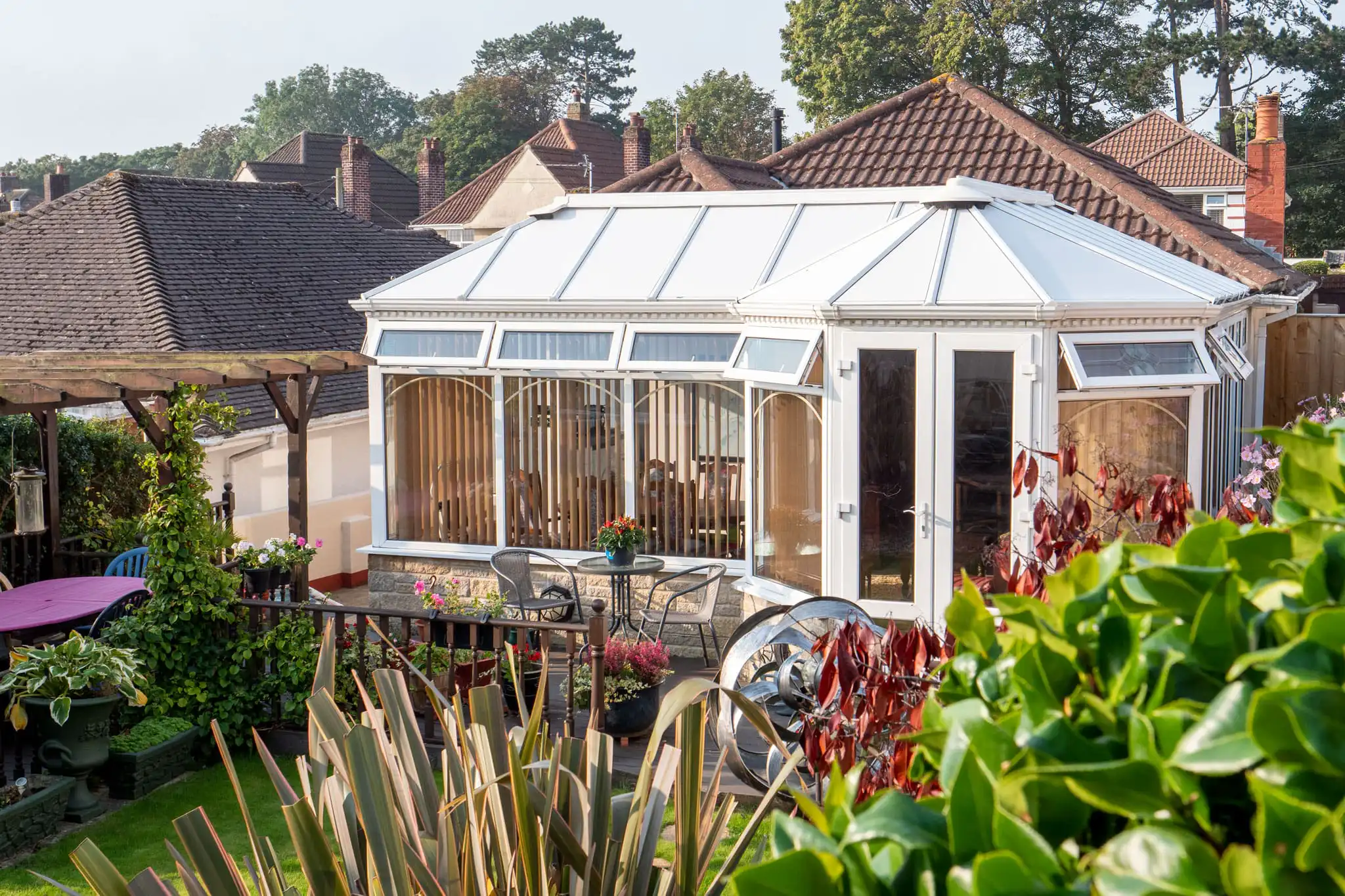
Quick answer: Conservatory insulation typically costs £2,000–£4,500 for internal roof panels, or £5,000–£8,000 for a full insulated roof replacement, on a standard 9m² space. Most conservatories are exempt from planning permission, but replacement roofs need building regulations approval. Choosing the right option depends on your roof type, budget, and how much natural light you want to keep.
If your conservatory sits empty for half the year, you’re not alone. It’s one of the most common complaints among UK homeowners, and it’s almost always solvable.
Why does my conservatory get too hot or too cold?
A conservatory without proper insulation struggles to hold a stable temperature. In summer, an uninsulated glass or polycarbonate roof lets solar heat pour in unchecked. In winter, that same roof lets warmth escape just as fast, leaving you reaching for extra heaters that barely make a dent in your energy bill.
This isn’t a design flaw you have to live with. One home energy case study from Climate Action Stokesley and Villages documented exactly this problem: a bungalow’s old polycarbonate conservatory was “too hot in summer and too cold in winter” before the homeowners replaced it with a fully insulated space as part of a wider retrofit. The result was a more uniform temperature throughout the entire house.
The good news is you don’t need a whole-house retrofit to fix this. According to the Energy Saving Trust, homes can lose around 25% of their heat through an uninsulated roof. Addressing that heat loss, even in a single room like a conservatory, keeps your space warmer in winter, cooler in summer, and far more comfortable to use throughout the year.
What are the best insulation options for a conservatory roof?
Once you’ve identified the problem, the next step is choosing the right fix. There’s no single “best” material for every conservatory. The right choice depends on your existing roof, your budget, and how much natural light you’re willing to trade for comfort.
| Insulation type | How it works | Pros | Cons | Typical use case |
|---|---|---|---|---|
| Multi-foil insulation | Reflective foil layers fitted beneath the roof to bounce heat back | Affordable, lightweight, minimal structural impact | Less effective alone than solid insulation; often paired with other layers | Budget-conscious upgrades on polycarbonate roofs |
| Insulated panels (plasterboard finish) | Rigid foam or mineral wool panels fitted beneath the existing roof, finished with a plastered ceiling | Strong thermal performance, quick install, keeps existing roof structure | Reduces natural light; roof insulation panels are usually 24–32mm thick | Conservatories used as everyday living space |
| Insulated timber roof replacement | Full roof replacement with lightweight tiles, insulation, and a plastered internal finish | Best long-term thermal performance, can boost property value | Highest upfront cost, longer installation time | Older or structurally tired roofs nearing the end of their life |
| Thermal blinds | Roller blinds fitted to windows and roof glazing to reduce heat transfer | Low cost, easy to retrofit, adjustable | Doesn’t address roof heat loss directly | Supplementary fix alongside roof insulation |
Research from Historic England shows that thermal roller blinds can substantially reduce heat loss through windows, making them a useful add-on even after you’ve insulated the roof.
If your budget is tight, start with multi-foil insulation or thermal blinds. If you’re planning to use your conservatory every day, all year round, an insulated panel system or full roof replacement delivers stronger, longer-lasting results.
Do I need planning permission for conservatory insulation?
Here’s some reassuring news: most conservatory insulation projects don’t need planning permission at all.
According to the Planning Portal, conservatories are normally exempt from building regulations when they:
- Are built at ground level and cover less than 30 square metres
- Are separated from the main house by external-quality walls, doors, or windows
- Have an independent heating system with separate controls
- Use glazing and electrics that comply with existing regulations
- Are single storey
However, there’s an important exception. Any new structural opening between your conservatory and the house — for example, if you’re planning to open the space up as a proper extension — will require building regulations approval, even if the conservatory itself is otherwise exempt. If you’re replacing your entire roof rather than adding internal insulation, building regulations approval typically applies there too.
When in doubt, a quick call to your local council or your chosen installer will confirm exactly what your project needs before work begins.
How much does conservatory insulation cost?
Cost is usually the first question on every homeowner’s mind, and it’s a fair one. Here’s what you can expect to pay, based on current UK market data.
| Option (typical 9m² conservatory) | Cost range | Installation time |
|---|---|---|
| Internal roof insulation with finished ceiling | £2,000–£4,500 | 1–2 days |
| New insulated timber roof with plastered finish | £5,000–£8,000 | 3–5 days |
These figures come from Checkatrade’s 2026 cost guide, and they’re a useful starting point for budgeting. Your final price will depend on:
- The size and pitch of your roof
- The type of ceiling (suspended, vaulted, or lean-to)
- Whether structural reinforcement is needed
- Ventilation requirements
- Your location and local labour rates
Choose internal insulation if your existing roof is structurally sound and you want a faster, less disruptive upgrade. Choose a full roof replacement if your roof is ageing, leaking, or you want the strongest possible thermal performance for the long term.
What should I ask before hiring a conservatory installer?
Choosing the right installer matters just as much as choosing the right insulation. A poorly fitted system can lead to condensation, damp, or even structural issues down the line.
Citizens Advice recommends working through a simple checklist before you commit:
- Check permissions first. Confirm whether your project needs planning permission or building regulations approval before any work starts.
- Verify credentials. Ask if the installer belongs to a competent person scheme, and request two or three references from recent, similar jobs.
- Get quotes, not estimates. A quote is a fixed price; an estimate is a guess. Always get quotes in writing from at least three installers.
- Confirm insurance. Ask to see proof of public liability insurance, and check it doesn’t expire before your project completes.
- Insist on a written contract. It should cover start and finish dates, materials, payment stages, and what happens if there are delays.
- Check the warranty. Find out how long it lasts, what it covers, and whether it’s insurance-backed in case the installer goes out of business.
A trustworthy installer will answer every one of these questions without hesitation. If someone dodges references, refuses a written quote, or pressures you to decide immediately, treat that as a warning sign.
How do I compare conservatory insulation quotes?
Once you’ve got quotes in hand, resist the urge to simply pick the cheapest one. Use a simple worksheet to compare like for like:
- Total fixed price — not a daily rate
- Breakdown of materials and labour — separated line by line
- Insulation type and thickness — so you’re comparing the same specification across quotes
- Timeline — how many days the job will take
- Payment structure — staged payments are safer than large upfront deposits (avoid anything over 25%)
- Warranty terms — length of cover and whether it’s insurance-backed
- VAT inclusion — confirm whether quoted prices include VAT
Laying quotes side by side this way makes it easy to spot the installer offering genuine value, not just the lowest number on the page.
What are the long-term benefits of insulating your conservatory?
Getting your conservatory insulated pays off well beyond the first comfortable evening you spend in it.
- Lower energy bills. Reducing heat loss means your heating system works less hard to keep the space usable.
- Year-round usability. A well-insulated conservatory becomes a proper extension of your home — a home office, playroom, or reading nook you can use in January as easily as July.
- Reduced noise. Insulated roof panels dampen the sound of rain, making the space far more pleasant during a downpour.
- Increased property value. A conservatory that functions as genuine living space, rather than a glorified greenhouse, adds more appeal for future buyers.
- Better condensation control. Proper insulation, paired with adequate ventilation, reduces the moisture buildup that leads to damp and mould.
Insulating your conservatory doesn’t need to be overwhelming. Whether you start with a simple thermal blind upgrade or commit to a full insulated roof replacement, every step moves you closer to a space you’ll actually want to use.
Ready to get your conservatory insulation quote?
You now have everything you need to move from “my conservatory is unusable” to a confident, informed decision. Use the insulation options matrix to narrow down your choice, the cost guide to set your budget, and the installer checklist to find a trader you can trust.
Request a free, no-obligation quote today and take the first step toward a conservatory you can enjoy in every season.
Frequently asked questions
How much does it cost to insulate a conservatory roof?
Internal roof insulation typically costs £2,000–£4,500 for a standard 9m² conservatory. A full insulated timber roof replacement usually costs £5,000–£8,000, depending on size, roof type, and any structural work required.
Do I need planning permission to insulate my conservatory?
Most internal insulation projects don’t need planning permission. Conservatories are normally exempt from building regulations if they’re single storey, under 30 square metres, and separated from the house by external-quality doors or windows. Full roof replacements typically need building regulations approval instead.
How long does conservatory insulation take to install?
Internal roof insulation usually takes one to two days. A full roof replacement takes three to five days, depending on size and weather conditions.
Will insulation stop my conservatory roof from causing condensation?
Insulation reduces the temperature swings that cause condensation, but proper ventilation is essential alongside it. Without adequate airflow, moisture can still build up even in an insulated space.
Is conservatory insulation worth it if I’m planning to sell my home?
Yes. A conservatory that functions as usable living space year-round is more attractive to buyers than one that’s too hot or cold to use for half the year, and it can support a stronger asking price.