
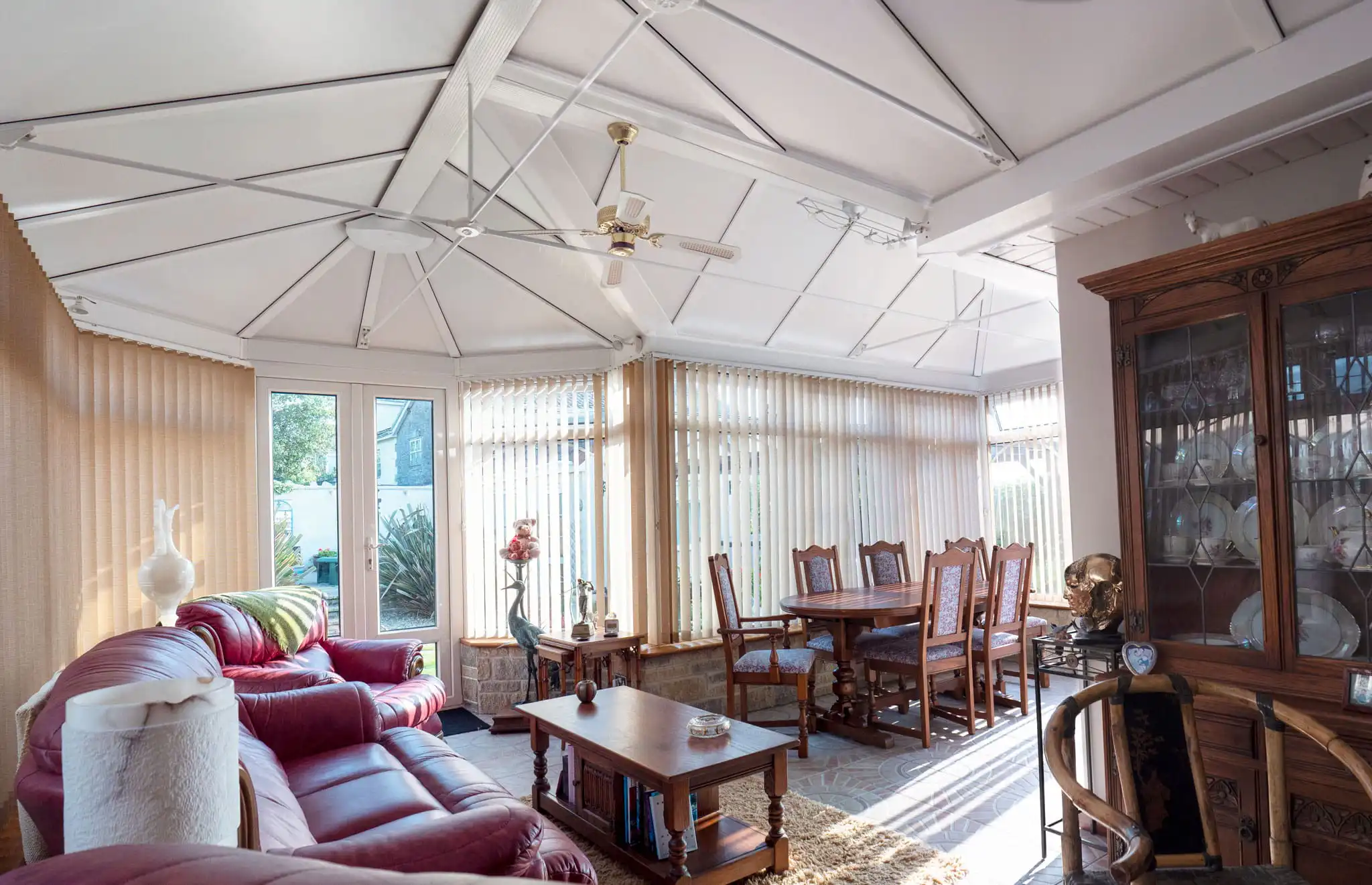
Quick answer: The most effective way to insulate your conservatory is to tackle the roof first, since this is where most heat is lost in winter and gained in summer. Options range from budget fixes like blinds and window film to insulated roof panels and full replacement roofs. The right choice depends on your budget, how you use the space, and whether you want to keep maximum natural light.
A conservatory should be one of the most-loved rooms in your home – somewhere to read on a rainy afternoon, host family gatherings, or simply enjoy a view of the garden. Too often, though, it becomes the room you avoid: freezing in winter, stifling in summer, and empty for most of the year.
The good news is that this doesn’t need to be a permanent problem. Most conservatory discomfort comes down to a handful of fixable issues – poor roof insulation, single-glazed frames, and limited ventilation. Once you understand where the heat is escaping (or building up), you can choose a solution that suits your home, your budget, and your lifestyle.
This guide walks through why conservatories struggle to regulate temperature, the full range of insulation methods available, what roof insulation involves, and how to decide which option makes sense for you.
Why conservatories are hard to keep warm in winter and cool in summer
Conservatories are built mostly from glass and lightweight frames, which makes them beautiful but thermally inefficient compared to the rest of your home. Understanding the specific causes of discomfort helps you target the right fix.
Heat loss through glass, frames and especially the roof
Glass and thin frame materials conduct heat far more readily than brick or insulated walls. In winter, warmth escapes through these surfaces quickly, leaving the room cold even when your heating is on. The roof is usually the biggest culprit: with polycarbonate or single-glazed panels overhead, heat rises and escapes directly through it, making the ceiling the least efficient part of the structure.
The greenhouse effect and summer overheating
In summer, the same glass that lets heat escape in winter also lets the sun’s energy in – and traps it. This is the classic greenhouse effect: solar heat enters through the roof and glazing, but has nowhere to go, causing temperatures to climb rapidly on sunny days. Without proper ventilation or solar control, a conservatory can become uncomfortably hot by midday.
How orientation, shade and ventilation affect comfort
Not every conservatory suffers equally. A south-facing room with little shade will overheat faster than a north-facing one. Nearby trees, fences, or extensions can offer natural shade, while opening windows, roof vents, or installing extractor fans helps manage airflow. Orientation and ventilation won’t solve poor insulation on their own, but they do influence how severe the problem feels day to day.
Ways to insulate your conservatory
There’s no single fix for every conservatory. Most homeowners combine a few methods, starting with lower-cost options and moving up to more substantial upgrades as needed.
Curtains, blinds and drapes
Thermal curtains, cellular blinds, and heavy drapes add a layer of insulation over glazing. They’re affordable, easy to install, and give you control over light and privacy. On their own, they won’t transform the room’s performance, but they reduce draughts and heat loss through windows and side glazing.
Solar control or heat-control window film
Applied directly to glass, solar control film reduces the amount of solar heat entering the room while still allowing light through. This is a practical option if summer overheating is your main concern, though it does little to address winter heat loss.
Draught-proofing and smaller thermal improvements
Gaps around doors, window frames, and roof joints let warm air escape and cold air in. Draught excluders, sealant, and weatherstripping are inexpensive ways to close these gaps and make heating more effective.
Conservatory roof insulation
Since the roof is typically the biggest source of heat loss and gain, insulating it tends to deliver the most noticeable improvement. This can mean fitting internal insulation panels to your existing roof structure or replacing the roof altogether with an insulated system.
Replacing the roof with insulated roof panels or a solid-style system
For homeowners who want a conservatory that genuinely performs like the rest of the house, replacing the roof with insulated panels or a solid tiled roof offers the biggest transformation. This is a bigger investment, but it addresses the root cause of most temperature problems rather than managing the symptoms.
How to insulate a conservatory roof
Because the roof plays such a central role in conservatory temperature, it’s worth understanding the main approaches in more detail.
Internal insulation panels fitted to the existing roof
Lightweight insulated panels can be fitted internally to an existing conservatory roof structure, without the need to remove and rebuild the roof entirely. CosyPanels®, for example, are lightweight UPVC panels wrapped around high-density insulation and designed to fit into existing roof frameworks. This type of system is one option worth considering if you want roof-level insulation without a full rebuild.
Insulated replacement roof systems
A full replacement roof – typically tiled or solid-panel – removes the original glazed or polycarbonate structure entirely and replaces it with a highly insulated alternative. This tends to offer the strongest year-round performance but usually involves more disruption and a larger budget.
Glass vs polycarbonate vs insulated panel considerations
- Glass roofs retain more natural light and a traditional conservatory feel, but offer limited insulation on their own.
- Polycarbonate roofs are lightweight and affordable but prone to significant heat loss and gain, as well as noise during rain.
- Insulated panel roofs prioritise thermal performance and noise reduction, generally at some cost to how much natural light enters the room.
When roof insulation is likely to make the biggest difference
If your conservatory becomes unbearably hot in summer or practically unusable in winter, roof insulation is usually where to start. Homeowners who already have reasonably efficient glazing and frames, but still struggle with comfort, often find the roof is the missing piece.
Conservatory insulation solutions compared
With several options on the table, it helps to see them side by side.
Cheapest short-term fixes
Blinds, curtains, and draught-proofing offer the lowest upfront cost and can be installed in a day. They won’t transform a poorly insulated roof, but they take the edge off extreme temperatures and reduce draughts.
Mid-range improvements
Window film and more comprehensive draught-proofing sit in the middle, offering noticeably improved comfort without the cost or disruption of structural work.
Long-term structural solutions
Insulated roof panels and full roof replacements represent the biggest investment, but also the most complete transformation – turning a seasonal space into a room usable throughout the year.
Pros and cons of each option
- Curtains and blinds: low cost, easy to fit; limited impact on overall temperature.
- Window film: effective for summer glare and heat; little benefit in winter.
- Draught-proofing: cheap and quick; addresses draughts, not core insulation.
- Roof insulation panels: strong year-round improvement; moderate investment and installation time.
- Full roof replacement: the most comprehensive fix; the highest cost and most disruption.
How much does conservatory roof insulation cost?
Pricing for conservatory roof insulation varies considerably depending on the size of your conservatory, the type of system you choose, and the complexity of installation. Rather than quote a figure that may not reflect current market pricing, it’s best to treat cost as something to confirm directly with suppliers based on your specific conservatory.
What affects the price
- The size and shape of your conservatory roof
- Whether you’re fitting internal insulation panels or replacing the roof entirely
- The materials used, such as UPVC-wrapped panels versus solid tiled systems
- Labour and installation time, including any access requirements
- Any additional work needed, such as reinforcing the existing frame
Upfront cost vs long-term value
A higher upfront investment in a full roof replacement or insulated panel system can reduce ongoing heating costs and extend how many months of the year you actually use the room. Weigh the installation cost against how much more use – and comfort – you’ll get from the space.
Questions to ask before requesting a quote
- Does the quote include materials, labour, and any necessary structural checks?
- What’s the expected installation timeframe, and how disruptive will it be?
- Is there a warranty on materials and workmanship?
- How does the quote compare for similar-sized conservatories?
A note for homeowners: always ask for a detailed, itemised quote rather than a single headline figure. This makes it much easier to compare suppliers fairly.
What is the best insulation for a conservatory roof?
The “best” option depends entirely on what matters most to you – budget, light, noise, or year-round performance.
Best option for year-round use
Insulated roof panels or a full replacement roof generally offer the most consistent temperature control across all seasons, making them the strongest choice if you want to use your conservatory year-round.
Best option for lower budgets
Draught-proofing combined with thermal curtains or blinds is the most accessible starting point, offering a noticeable improvement without a large financial commitment.
Best option if you want to keep maximum natural light
A well-specified glass roof, potentially paired with solar control film, retains the most daylight while still addressing some of the summer heat issue.
Best option if glare and noise are major issues
Insulated panel systems, such as CosyPanels®, tend to reduce both glare and the sound of rain, since the dense insulation layer dampens noise that would otherwise travel straight through glass or polycarbonate.
How to choose the right conservatory insulation method
With several valid options, your decision should come down to your conservatory’s structure and your own priorities.
Consider your roof type and existing structure
Glass, polycarbonate, and existing frame strength all influence which insulation methods are suitable. An internal panel system like CosyPanels® is designed to fit into existing roof frameworks, which can make it a practical option where a full rebuild isn’t necessary or desired.
Consider comfort, appearance and maintenance
Think about how the finished room will look and feel day to day – whether you want a brighter, more glass-like ceiling or a solid, house-like finish – as well as how much upkeep each option requires over time.
Check any structural or building regulation implications
Some roof changes may have building regulation implications, and any claims about “no structural change” should be verified with the installer and, where relevant, your local authority before work begins. It’s worth asking suppliers directly how their product affects your conservatory’s structure and whether any consents are required.
Common mistakes to avoid when insulating a conservatory
A few avoidable missteps can leave homeowners disappointed with the results.
Choosing a fix that only helps in one season
Window film helps in summer; draught-proofing helps in winter. Relying on a single-season fix often means the room is still uncomfortable for part of the year. Where possible, choose a combination of solutions – or a roof-level fix – that addresses both extremes.
Ignoring condensation and ventilation
Insulation changes how air moves and how moisture behaves in a space. Without adequate ventilation, condensation can build up, particularly around frames and glazing. Ask any installer how their system handles ventilation and moisture management as part of the upgrade.
Comparing options on price alone
The cheapest option isn’t always the best value if it only solves part of the problem. Compare suppliers and methods on performance, warranty, and suitability for your conservatory – not just the upfront price.
Final thoughts
Insulating your conservatory doesn’t need to mean choosing between a quick, affordable fix and a complete transformation. Blinds, window film, and draught-proofing offer a sensible starting point for many homeowners, while roof-level solutions – from internal insulated panels to full roof replacements – tend to deliver the most noticeable, year-round improvement. If you’re ready to discuss options, get in touch with CosyPanels for a transparent quote.
When it makes sense to get specialist advice or a quote
If you’ve tried smaller fixes and your conservatory is still too hot in summer or too cold in winter, it’s worth getting a specialist assessment. A supplier can look at your existing roof structure, talk through options such as internal insulated panel systems, and provide a detailed quote so you can compare costs and benefits properly before committing. Getting a few quotes, asking the right questions, and checking any structural or regulatory implications will help you choose the option that genuinely suits your home.
FAQs
What is the fastest way to make my conservatory more comfortable?
Thermal curtains, cellular blinds, and draught-proofing are the quickest options to install and can reduce draughts and some heat loss or gain within a day, though they won’t match the impact of roof-level insulation.
How long does conservatory roof insulation take to install?
Installation time varies by system and the size of your conservatory. Internal insulated panel systems, which fit into the existing roof framework, are generally quicker to install than a full roof replacement. Ask your installer for a specific timeframe based on your conservatory.
Will insulating my conservatory roof reduce natural light?
Some reduction in light is likely with solid or insulated panel roofs compared with glass, though many systems use light-reflective interior finishes to help offset this. If maximum daylight is a priority, a glass roof paired with solar control film may suit you better.
Do I need planning permission or building regulations approval?
This depends on the type of work and your local authority’s requirements. Always confirm building regulations implications with your installer and local council before proceeding, particularly for structural roof changes.
Is insulating the roof worth it if I only use my conservatory occasionally?
If you’d like to use the room more often throughout the year, roof insulation is typically where you’ll see the biggest shift in comfort, since the roof is usually the main source of heat loss and gain. For occasional use, lower-cost fixes like blinds or draught-proofing may be sufficient.
What’s the difference between internal insulated panels and a full roof replacement?
Internal insulated panel systems, such as CosyPanels®, are designed to fit into your existing roof framework without a full rebuild. A full roof replacement removes the original structure entirely and installs a new insulated or tiled roof, which is a larger undertaking but may suit conservatories needing more extensive structural work.