
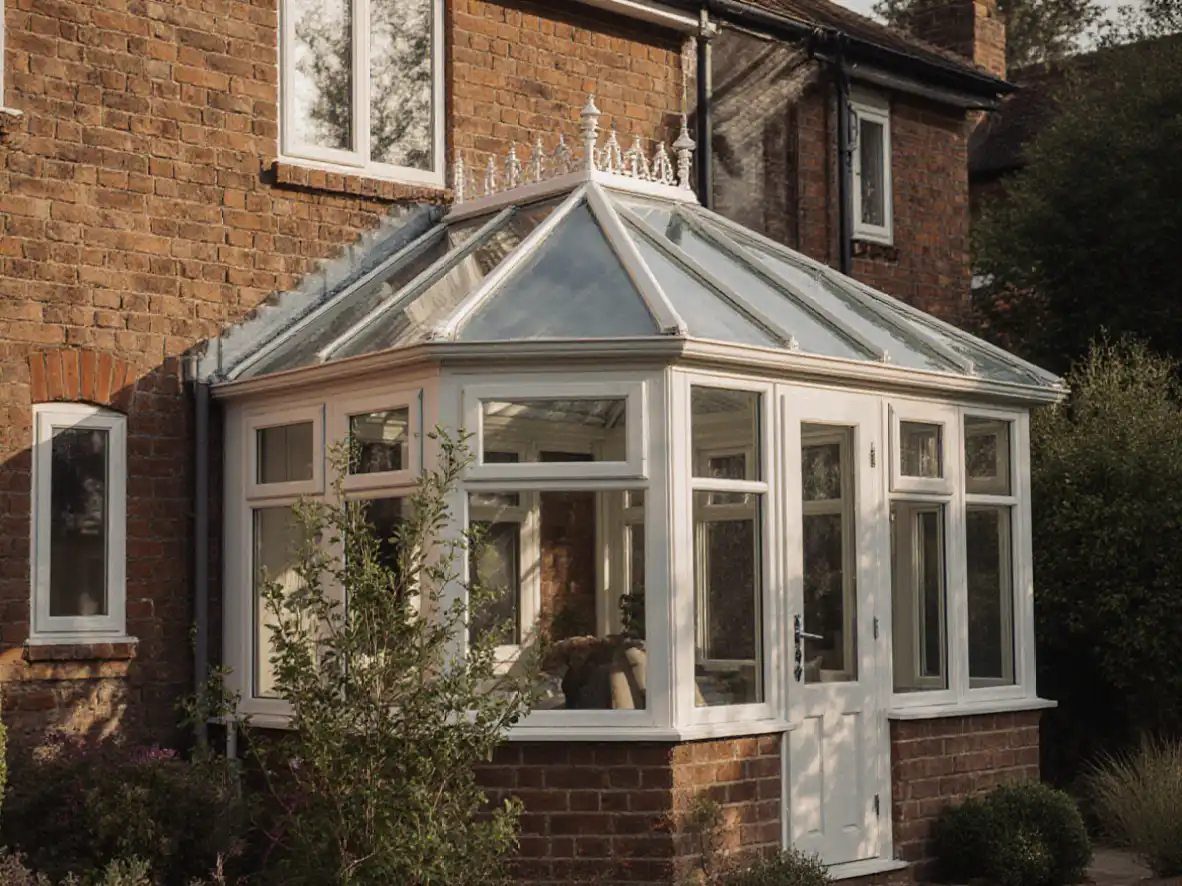
Quick answer: PIR boards are rigid insulation material used across construction projects, from walls to floors to roofs. CosyPanels are a complete, finished roofing system made specifically for conservatories, combining a UPVC outer shell with high-performance insulation. If you’re upgrading a conservatory roof, you need a finished system, not a raw material that still requires cladding, cutting and weatherproofing.
Choosing the right material for your conservatory roof conversion isn’t always straightforward. You’ll likely come across two very different products during your research: PIR insulation boards and CosyPanels. Both promise better thermal performance, but they solve different problems for different projects.
Understanding this distinction matters before you commit to a solution. Get it wrong, and you could end up with a product that needs extra materials, more labour, and a longer installation timeline than you bargained for.
What Are PIR Insulation Boards?
PIR (polyisocyanurate) boards are rigid, closed-cell insulation panels used throughout the construction industry. According to the Insulation Manufacturers Association, PIR is made by combining a liquid polyol with a liquid polymeric isocyanate and a blowing agent, creating a low-density board with excellent thermal properties.
You’ll typically find PIR boards used in:
- Masonry cavity walls
- Timber or steel frame walls
- Pitched and flat roofs
- Ground floors
Brands like Celotex and Kingspan dominate this space, offering foil-faced boards designed to slot into a wider building assembly. The Celotex GA4000 technical datasheet is a good example: it sets out the published thermal resistance values and confirms that these boards are intended for roof, wall and floor applications as part of a larger, professionally designed build-up.
This is the key point: PIR boards are a raw material, not a finished product. They need cutting to size, fixing, taping, and usually additional layers of cladding or weatherproofing to do their job properly.
What Are CosyPanels?
CosyPanels take a completely different approach. Rather than being a generic insulation board, they’re a bespoke, made-to-measure roofing system designed specifically for conservatories. Each panel is precision-manufactured from UPVC with UV protection, wrapped around a core of high-density, waterproof polyurethane foam.
According to the official CosyPanels brochure, this construction delivers four practical benefits:
- Cooler in summer – UV protection removes glare and reduces solar heat gain
- Warmer in winter – the insulated core keeps heat where you want it
- Quieter in bad weather – the panels dampen the sound of rain far more effectively than polycarbonate or glass
- Up to eight times more efficient than a standard polycarbonate or glass roof
Because CosyPanels are measured and manufactured to fit your existing conservatory frame, there’s no need for structural alteration. That’s a real advantage if you want your conservatory usable again without a lengthy renovation.
You can see this play out in practice through the CosyPanels case study for Mr & Mrs Walter, whose conservatory had become too hot in summer and too cold in winter. After installation, their energy bills dropped significantly, and their long-standing problem with spiders and flies disappeared too. Their conservatory went from a rarely used space to a room they enjoy all year round.
Key Differences Between PIR Boards and Cosy Panels
| PIR Boards | CosyPanels | |
|---|---|---|
| Product type | Raw insulation material | Complete, finished roofing system |
| Typical use | Walls, floors, roofs (general construction) | Conservatory roof replacement only |
| Composition | Foil-faced rigid polyisocyanurate | UPVC outer shell with polyurethane foam core |
| Installation | Requires cutting, fixing, and additional cladding | Bespoke fit, installed as a complete panel |
| Structural work | Often part of a larger build-up | Fits existing conservatory framework |
| Installation time | Depends on scale of project | As little as one day |
This table highlights the core distinction: PIR is a component, while CosyPanels is a solution.
Why Homeowners Choose CosyPanels for Conservatories
If your conservatory sits empty for half the year because it’s too hot or too cold, a finished system like CosyPanels solves that problem directly. You get:
- Year-round usability without extending or rebuilding
- Natural light retention, since the panels are designed with reflective interior finishes that keep the room bright
- Quick, clean installation that doesn’t disrupt your home for weeks
- A cost comparable to replacing a tired polycarbonate roof, rather than the cost of a full extension
Before making any changes to your conservatory roof, it’s worth checking the government guidance on conservatories and porches. Some conservatories are exempt from Building Regulations, but further structural work can affect that exemption. A specialist installer will factor this in before your survey, so you don’t need to navigate it alone.
Why PIR Boards Suit Other Construction Projects
PIR boards remain the right choice for general construction work: extensions, new-build walls, floor insulation, and flat roofs where a bespoke panel system doesn’t apply. Their strength lies in versatility. A contractor can specify the exact thickness and finish needed for a given wall build-up, cavity, or floor void.
For conservatory roofs specifically, though, this flexibility becomes a drawback. You’d need to combine PIR boards with additional layers, fixings, and a finished internal surface, adding time and cost that a purpose-built system avoids entirely.
Cost Considerations
PIR boards are typically sold by the sheet, with prices varying by thickness. A 50mm board might cost around £29, rising to roughly £48 for 100mm. But this is just the material cost; you’ll still need labour, fixings, and finishing materials on top.
CosyPanels are priced as a complete installed system. While the upfront figure may look different from a single insulation board, it includes the manufacturing, fitting, and finish all in one. For a conservatory roof specifically, this often works out more cost-effective than piecing together a PIR-based solution yourself.
Installation and Maintenance
PIR board installation depends heavily on the wider project: a roofer or builder will cut, fit, and seal the boards as part of a larger job, which can take days depending on scale.
CosyPanels, by contrast, are designed for speed. Bespoke manufacturing means panels arrive ready to fit, and most conservatories are transformed in a single day, with minimal mess and no lengthy building work.
Both products are low-maintenance once installed. PIR boards, once sealed within a wall or roof build-up, require no ongoing attention. CosyPanels’ UPVC exterior is similarly easy to maintain, needing just an occasional wipe down to keep it looking new.
Environmental Impact
Sustainability is a growing factor in any home improvement decision. PIR insulation has a strong track record here: environmental product declarations provide lifecycle data showing that PIR insulation can deliver decades of energy savings that outweigh the impact of its production.
CosyPanels benefit from the same underlying insulation technology, meaning the energy savings you make from reduced heating and cooling use over the lifetime of the panels help offset the environmental cost of manufacturing. A well-insulated conservatory that gets used all year round, rather than sitting empty, is a more efficient use of your home’s footprint either way.
Get Expert Advice for Your Conservatory
Choosing between PIR boards and a dedicated system like CosyPanels doesn’t need to be overwhelming. If you’re planning general building work, PIR boards give you the flexibility to insulate walls, floors, and roofs as part of a bigger project. If you want your conservatory back as a comfortable, usable room, a finished system built specifically for that purpose will save you time, cost, and hassle.
Speak to a roofing specialist about your conservatory. They can survey your existing structure, talk through your options, and recommend the right solution for your home and your budget.
Frequently Asked Questions
Can I use PIR boards to insulate my conservatory roof myself?
Yes, but you’ll need to combine the boards with additional cladding, fixings, and weatherproofing to create a finished roof. This adds time and cost compared with a bespoke, ready-to-fit system.
How long does a CosyPanels installation take?
Most installations are completed in a single day, since panels are precision-manufactured to fit your existing conservatory frame before the team arrives.
Will replacing my conservatory roof affect its Building Regulations exemption?
It can. The government’s guidance on conservatories and porches explains that further work on an exempt conservatory may affect its status, so it’s worth checking with your installer before work begins.
Are CosyPanels more expensive than PIR boards?
CosyPanels are priced as a complete, installed system, while PIR boards are sold as a material only. Once you factor in labour and additional materials for a PIR-based conservatory roof, the total cost is often comparable, or higher, than a bespoke panel system.
Do CosyPanels reduce noise from rain?
Yes. The insulated core inside each panel significantly reduces noise transfer compared with polycarbonate or glass roofing, making your conservatory quieter during bad weather.