
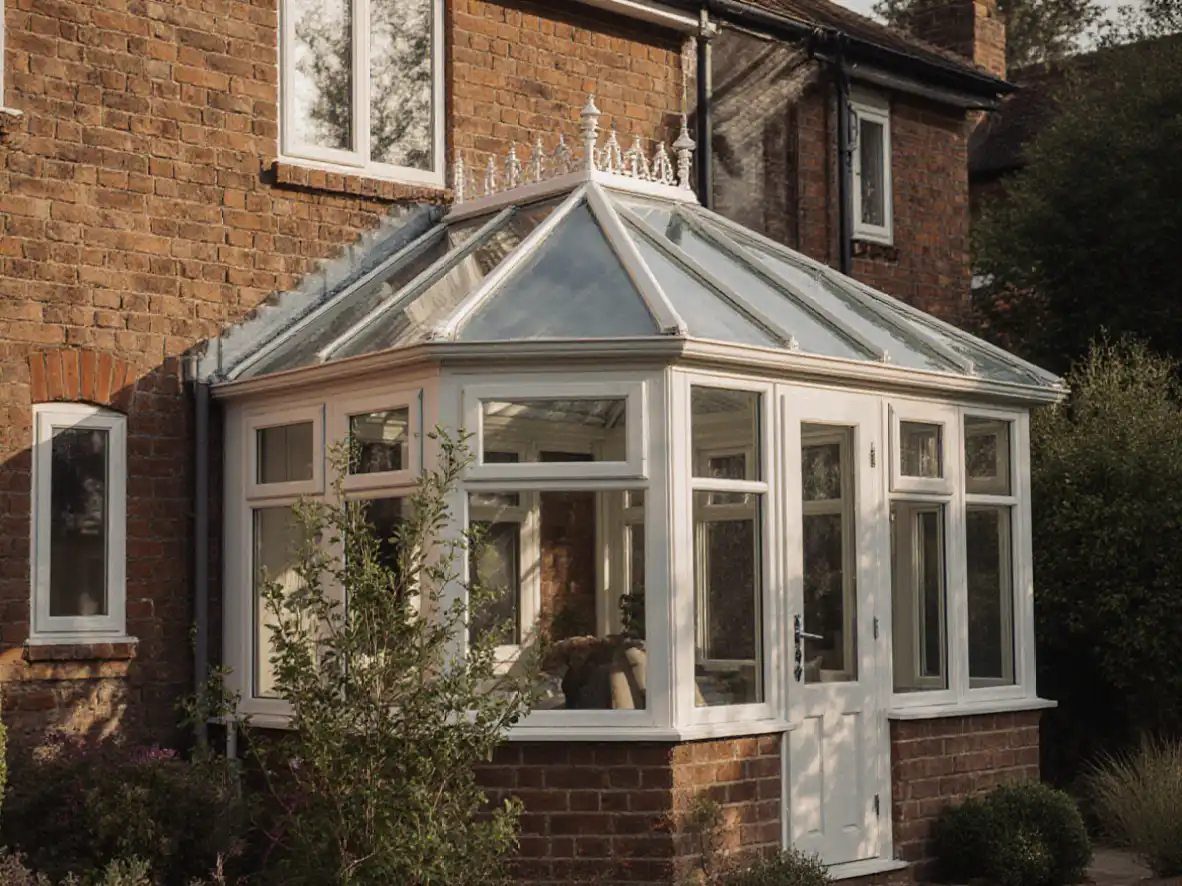
Quick answer: Conservatory roof insulation solves heat loss and noise problems caused by an uninsulated roof, while new glazing fixes issues with draughts, cold glass, and failed seals in the windows and doors. Most conservatories that are too hot in summer and too cold in winter need roof insulation first, since the roof typically accounts for the greatest share of heat loss in a glazed structure. A diagnostic survey identifies which element is actually causing your discomfort before you spend on either fix.
If your conservatory sits empty for half the year, you’ve probably wondered whether the roof or the windows are to blame. It’s a fair question, and it’s one that trips up plenty of homeowners before they commit to an upgrade.
The trouble is that conservatories combine several different building elements — roof, glazing, and frames — and each one fails in its own way. Spend money on the wrong fix, and you’re left with the same draughty corner or stuffy afternoon you started with.
This guide breaks down how to tell roof problems from glazing problems, what each fix actually costs, and when you need both. By the end, you’ll know exactly what to ask for when you book a survey.
What’s actually causing your conservatory discomfort?
Most conservatory complaints trace back to one of three sources: the roof, the glazing, or the frames. Each has a distinct signature, so matching your symptoms to the right cause saves you from paying for the wrong upgrade.
| Symptom | Likely cause | Typical fix |
|---|---|---|
| Loud rain noise, room feels like a greenhouse in summer | Uninsulated polycarbonate or single-glazed roof | Roof insulation panels or solid roof |
| Room is bright but always cold near the glass | Old or uncoated glazing | Replacement double or triple glazing |
| Draughts around window edges, doors don’t seal well | Worn frames or failed seals | Frame replacement or reseal |
| Condensation between glass panes | Failed double-glazing seal | New glazing units |
| Cold all over, regardless of the wall you’re near | Combination of roof, glazing, and frame issues | Combined upgrade |
According to the Energy Saving Trust, whole-window performance depends on heat loss, draughts, and solar gain working together, not just the glass itself (Energy Saving Trust). This is why a proper diagnosis looks at the whole structure, not a single component. Heat pump installers use the same principle when they assess a property: they measure loss room by room, accounting for the roof, windows, doors, frame condition, and any gaps or cracks that let warm air escape (Energy Saving Trust Green Heat Toolkit). Your conservatory deserves the same level of scrutiny before you commit to a fix.
Is your roof the real problem?
A conservatory with an uninsulated roof struggles to hold heat, no matter how good the glazing is. Heat rises, and an old polycarbonate or thin glass roof lets it escape straight through.
You’ll notice this most as:
- Overheating in summer, even with the windows open
- Rapid heat loss in winter, so the room cools fast once the heating switches off
- Rain noise that makes conversation or television difficult
- Faded furniture or fabrics from unfiltered UV exposure
Insulating the roof addresses all of these issues at once. Insulated panels fitted beneath the existing structure reduce heat transfer, dampen noise, and block UV light, transforming a room you avoid into one you use every day.
If your roof is ageing or beyond simple insulation, a full replacement with a solid, insulated structure is worth considering. LABC guidance confirms that replacing a translucent conservatory roof with a solid one brings the structure under full building regulations, meaning the new roof must meet current thermal performance standards as a thermal element, and the supporting frame and foundations need checking for suitability (LABC). This is a bigger job than internal insulation, but it delivers the best long-term thermal performance.
Could your glazing be letting you down?
If your roof is sound but the room still feels cold near the windows, the glazing is a more likely culprit. Old or uncoated glass loses heat quickly and offers little resistance to summer sun.
Watch for these signs:
- Cold spots near the glass even when the heating is running
- Condensation forming between panes, which signals a failed seal
- Rooms that feel like a furnace when the sun is out
- Windows installed before 2002, when low-emissivity glass effectively became standard in UK building regulations
Modern glazing performance comes down to two figures: the U-value, which measures insulation, and the g-value, which measures how much solar heat passes through. According to Glass for Europe, coated double glazing achieves U-values as low as 1.2, and coated triple glazing pushes this down to around 0.7, compared with 5.6 or higher for single glazing (Glass for Europe). Choose a lower g-value if your conservatory faces south or west and overheats in summer. Choose a higher g-value if you want to capture more free solar warmth in a cooler, shadier spot.
Don’t overlook the frames
Frames rarely get the credit for causing discomfort, but they’re often the source of persistent draughts. Warped or poorly sealed frames let cold air in around the edges of otherwise decent glazing, undermining any upgrade you make elsewhere.
Check for:
- Visible gaps around the frame edges
- Difficulty opening or closing windows and doors smoothly
- Draughts you can feel by hand near the frame, even with the windows shut
Resealing or replacing worn frames is a relatively small job, but it makes a noticeable difference. It’s also worth doing before or alongside any glazing upgrade, since new glass fitted into a failing frame won’t perform as intended.
When you need both roof and glazing upgrades
Some conservatories show symptoms from every category at once — cold near the glass, hot under the roof, and draughty at the frames. In this situation, a single fix won’t solve the problem.
Combining roof insulation with new glazing gives you:
- Consistent temperature control across the whole room, not just improvement in one area
- Better acoustic performance, since both the roof and glass contribute to noise transfer
- A stronger return on your investment, because you won’t need a second round of work in a few years to fix the part you skipped
Planning Portal guidance notes that a conservatory typically keeps its exemption from full building regulations when it’s thermally separated from the house by compliant walls, doors, or windows, has its own independent heating controls, and uses glazing that meets current standards (Planning Portal). A combined upgrade is a good opportunity to check your conservatory still meets these criteria, particularly if the existing glazing or roof predates current standards.
How much does each option cost — and how disruptive is it?
Cost and disruption are usually the deciding factors once you know what needs fixing. Here’s what to expect for each option, based on current UK guide prices for a typical 9m² conservatory:
| Upgrade | Typical cost | Installation time | Disruption level |
|---|---|---|---|
| Internal roof insulation | £2,000–£4,500 | 1–2 days | Low |
| New insulated solid roof | £5,000–£8,000 | 3–5 days | Moderate |
| New glazing units (per conservatory) | Varies by size and frame material | 1–3 days | Low to moderate |
Internal roof insulation is generally the quickest and least disruptive route, according to Checkatrade, making it a sensible starting point if your roof is structurally sound but poorly insulated (Checkatrade). A full solid roof replacement costs more and takes longer, but it delivers stronger long-term thermal performance if your existing roof is ageing or damaged.
Should I replace my windows if I’m insulating the roof?
Not necessarily. If your glazing is modern, well-sealed, and free of condensation between the panes, insulating the roof alone often resolves most temperature and noise complaints, since the roof typically accounts for the largest share of heat loss in a glazed structure. Replace the glazing alongside the roof only if you’re seeing cold spots near the glass, failed seals, or windows installed before 2002. A diagnostic survey will confirm exactly which combination applies to your conservatory.
Get a clear answer with a diagnostic survey
Guessing which upgrade to buy leads to wasted money and the same uncomfortable room you started with. A diagnostic survey takes the guesswork out of the decision by assessing your roof, glazing, and frames together, then telling you exactly where your heat is escaping.
You’ll walk away with:
- A clear breakdown of which element is causing your discomfort
- A realistic cost estimate based on your conservatory’s actual condition
- A recommendation that fixes the real problem, not just the most obvious symptom
Booking a survey doesn’t need to be a big commitment. It’s a straightforward first step that puts you in control of the decision, backed by evidence rather than guesswork. Book your diagnostic survey today and find out exactly what your conservatory needs to become a room you use all year round.