
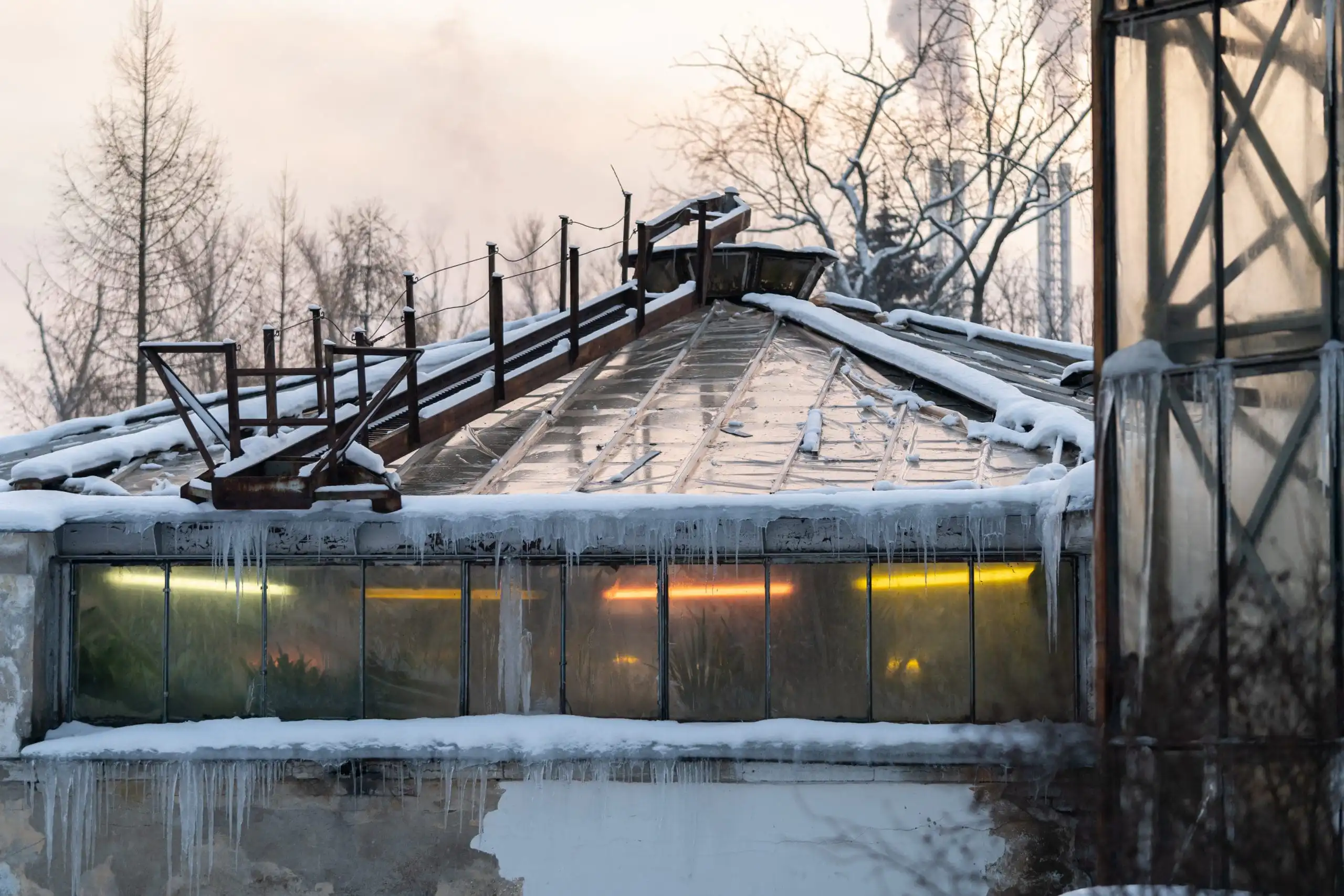
Quick answer: Most conservatories are too hot in summer and too cold in winter because of the roof. A polycarbonate or glass roof lets the sun pour in from above on warm days and lets heat escape quickly on cold nights, and in a typical conservatory it accounts for around 45% of all the heat lost. Fix the roof and you fix the biggest cause of both problems, without losing the light that makes a conservatory special.
If your conservatory turns into a greenhouse every June and a fridge every December, you’re not imagining it. It’s one of the most common complaints we hear from UK homeowners, and it usually comes down to the same few causes: the roof, draughts, and a lot of glass with nowhere for the heat to go.
The good news is that it’s a fixable problem, not a design flaw you have to live with. This guide walks you through the symptoms, what’s really causing them, and your options, from quick fixes to a permanent solution.
What Are the Symptoms of a Conservatory Temperature Problem?
Most homeowners recognise a few of these signs straight away.
In summer, you might notice:
- Unbearable heat that makes the room unusable by midday
- Furniture, flooring or fabrics fading from constant sun
- Glare that makes it hard to watch TV or work at a desk
- A noticeable temperature spike compared with the rest of the house
In winter, you might notice:
- A conservatory that never quite warms up, even with the heating on
- A cold feeling coming down from the roof above you
- Condensation on the inside of the glass or roof panels
- Cold draughts near the frames, doors or roof edges
Year-round, the space might feel:
- Only usable for a few months rather than all twelve
- Noisy during rain, thanks to a thin roof
- Disconnected from the comfort of the rest of your home
If several of these sound familiar, your conservatory isn’t behaving abnormally. It’s showing the textbook signs of a roof that can’t control heat.
What Causes a Conservatory to Overheat in Summer and Freeze in Winter?
The Roof Is the Biggest Culprit
Polycarbonate roofs are lightweight and affordable, which is why so many conservatories have them. But polycarbonate has a U-value of around 2.4 W/m²K, which means heat passes through it easily in both directions. In summer, the sun beats down on it all day and the heat builds up inside. In winter, the warmth you pay for rises straight to the ceiling and escapes.
Because the roof is the largest surface in the room and sits directly above you, it has more effect on how the room feels than anything else. Here’s where a typical conservatory loses its heat:
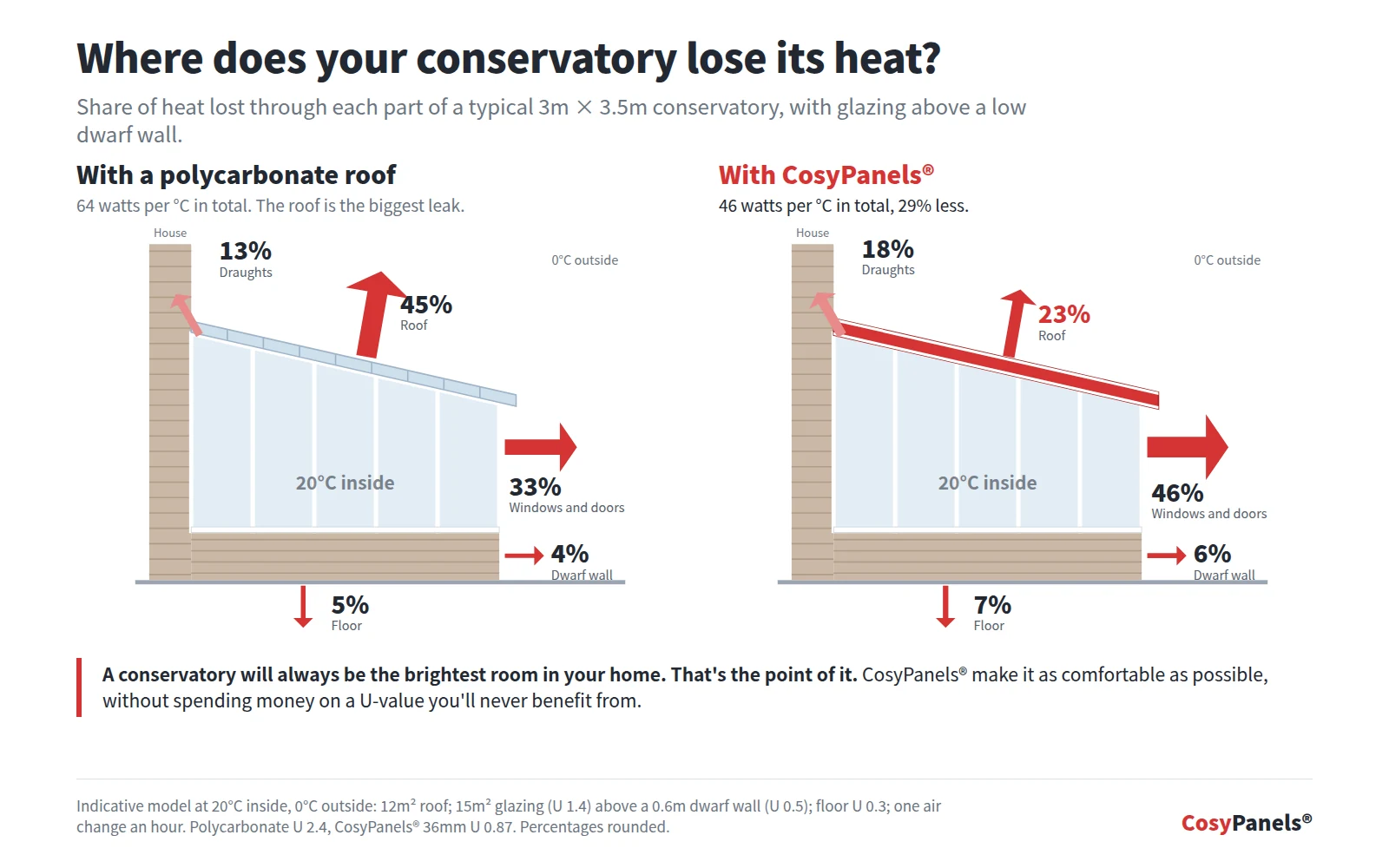
With a polycarbonate roof, the roof is responsible for around 45% of all the heat lost from the room, more than the windows, walls, floor and draughts.
Glass Roofs, Even Tinted Ones, Still Overheat
Modern glass roofs insulate better than old ones, but they still let the sun’s heat straight through from above. Tinted solar-control glass reduces this, but it doesn’t solve it: we regularly replace blue and grey solar-control glass roofs for customers who were still too hot in summer.
Draughts Are Quietly Wasting Your Heat
Gaps around frames, doors and roof joints let cold air creep in and warm air escape. The Energy Saving Trust’s draught-proofing guidance explains that these uncontrolled gaps waste energy and reduce comfort, although good ventilation still matters: you shouldn’t block trickle vents or seal off necessary airflow while tackling draughts elsewhere.
Lots of Glass and Not Enough Ventilation
The CIBSE TM59 overheating methodology identifies high proportions of glazing, excessive solar heat gains and poor ventilation as key drivers of overheating in homes. A conservatory with a see-through roof sits squarely in this category. Orientation matters too: a south-facing conservatory takes in far more sun than one facing north.
Conservatories Were Built to Different Rules
Under UK rules, conservatories are normally exempt from building regulations provided they’re separated from the house by external-quality doors or walls, have an independent heating system, and stay under 30 square metres on a single storey. That makes them quick to build, but it also means many were never required to meet the insulation standards that apply to the rest of your home.
Why the Roof Matters More Than Anything Else
A conservatory will always be the brightest room in your home. That’s the point of it. Because so much of it is glass, it will never perform exactly like an insulated extension, and it doesn’t need to. What makes it uncomfortable isn’t the glass walls you look through; it’s the roof above you, overheating in the sun and chilling the room on cold days.
Here’s what happened when we measured a conservatory before and after replacing its roof panels with CosyPanels®:
| Measurement | Before | After CosyPanels® |
|---|---|---|
| Sunny-day peak temperature | 38.2°C | 29.4°C |
| Internal roof surface in cold weather | 8.1°C | 17.3°C |
| Night-time heat loss | 2.8°C an hour | 0.9°C an hour |
| Energy needed to keep the room at 20°C | 2.1 kWh | 0.8 kWh |
| Hours a day at a comfortable temperature | 7.3 hours | 17.8 hours |
Average results measured during a test case. Your results will depend on your conservatory.
The room went from comfortable for about 7 hours a day to nearly 18, with the walls and windows unchanged. That’s the difference fixing the roof makes.
What Does It Cost You to Ignore the Problem?
- You lose usable space for months at a time. A room too hot for summer and too cold for winter might only be comfortable in spring and autumn.
- Your energy bills climb. Heating a conservatory with a polycarbonate roof costs far more than it needs to. Based on current energy prices, replacing a typical polycarbonate roof with 36mm CosyPanels® saves around £78 a year with gas central heating, or around £232 with electric heaters. See our U-value guide for how we worked this out.
- Your furniture and fittings wear out faster. Sun and temperature extremes fade fabrics, warp wood and shorten the life of anything left in the room.
- Your home’s appeal takes a hit. Buyers touring a stuffy or freezing conservatory during a viewing will notice.
Your Options, From Quick Fixes to a Permanent Solution
Quick Fixes Worth Trying First
- Blinds or shading: roof and wall blinds reduce glare and take the edge off the summer sun, although heat still builds up between the blind and the roof.
- Solar control film: applied to existing glass, it can reduce some summer heat, but like tinted glass it won’t stop the roof overheating altogether, and it does nothing for winter heat loss.
- Draught-proofing: sealing gaps around doors and frames is a low-cost way to reduce heat loss.
- Better ventilation: opening vents or adding trickle vents helps manage both heat and condensation.
These are sensible if your problems are mild, but none of them changes the roof itself. See our comparison of roof blinds and insulated roof panels.
Internal Roof Insulation (Multifoil)
Multifoil insulation is fitted as a ceiling underneath your existing roof, which stays exactly as it is above it. According to Homebuilding & Renovating, internal insulation only marginally improves the U-value, and sealing the space under the roof can trap heat or moisture, increasing the risk of condensation, damp, mould and damage to the original structure.
Insulated Roof Panels
CosyPanels® replace the glass or polycarbonate panels in your existing roof frame with insulated panels, so you upgrade the roof itself rather than covering it up. The 36mm panels we usually install lose around 64% less heat through the roof than polycarbonate, and because they’re opaque, they block the summer sun that turns a conservatory into a greenhouse. Your wall windows stay as they are, so the room keeps its daylight.
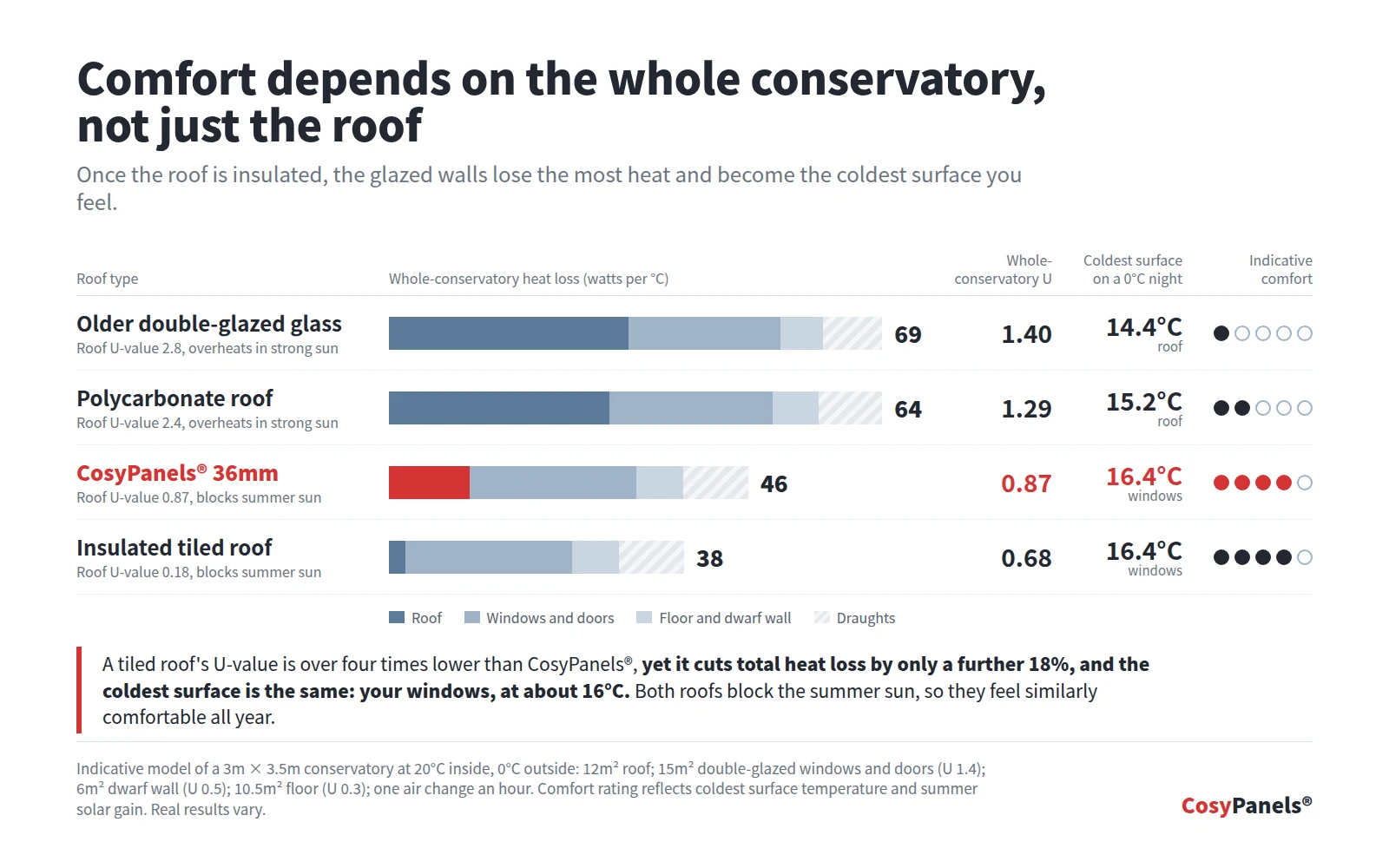
They’re fitted from one day, usually without structural work, and start from £3,146 including VAT. Here’s how they compare with other roofs for comfort:
A Tiled Roof
A fully insulated tiled roof has the lowest U-value of all, but in a typical conservatory with glazing above a low dwarf wall it cuts total heat loss by only around a further 18% compared with CosyPanels®, costs thousands more, and usually needs structural work. It starts to make a real difference when at least two of your conservatory’s outside walls are solid and insulated from floor to ceiling. Our tiled roof guide explains when it’s worth it. If a tiled roof is right for your home, we recommend our sister brand, All Seasons Roof.
When Should You Get a Survey?
If quick fixes haven’t worked and the room still swings between too hot and too cold, it’s time for a survey. It’s also worth arranging one if:
- You’re seeing condensation, leaks or sagging roof panels
- You want to use the conservatory as a proper living space all year
- You want a fixed, itemised price before committing to anything
- You’re unsure whether your existing frame is suitable for a new roof
At a free CosyPanels® survey we look at your whole conservatory, including the roof, walls, windows and doors, and tell you honestly what will make the biggest difference to your comfort. Find out how it works.
Frequently Asked Questions
How do I stop my conservatory from getting too hot?
Blinds and ventilation help in the short term, but the lasting fix is the roof. Replacing a polycarbonate or glass roof with insulated, opaque panels stops the sun pouring in from above. In our test case, the sunny-day peak dropped from 38.2°C to 29.4°C.
Why is my conservatory so cold even with the heating on?
Most of the warmth rises and escapes through the roof, which is usually the least insulated part of the room. With a polycarbonate roof, it accounts for around 45% of the heat lost. Insulating the roof also stops the cold ceiling effect you feel above you.
Will insulating the roof make my conservatory dark?
The roof becomes opaque, but your wall windows stay glazed, so the room keeps plenty of daylight. A conservatory will always be one of the brightest rooms in your home; insulating the roof simply takes away the extremes.
Do I need planning permission to fix my conservatory’s temperature problems?
Most roof upgrades don’t need planning permission if the size and height of the conservatory stay the same. Always check with your local council if you’re changing the size or structure significantly.
How much does it cost to fix a too hot, too cold conservatory?
Quick fixes such as blinds or draught-proofing cost a few hundred pounds. CosyPanels® start from £3,146 including VAT, while a new polycarbonate, glass or tiled roof typically costs £6,300 to £9,450 or more for a 3m × 3.5m conservatory. See our conservatory roof insulation cost guide.
Is it worth replacing a polycarbonate roof?
If your conservatory is unusable for several months a year, yes. Insulated roof panels keep temperatures far more stable, cut rain noise and lower the cost of heating the room, usually in a single day.
Make Your Conservatory Comfortable All Year
A conservatory that swings between too hot and too cold isn’t something you have to accept. In most cases the roof is the cause, and fixing it lets you keep the light while losing the extremes.
Request a free survey and fixed quote, or call us on 0800 058 4150.